A story for
the older kid.
Your older kid knows a baby is coming. They don't fully understand what that means. A personalized bedtime story where your kid is the hero who meets their new baby sibling — gently, step by step, with parents still close — gives them a rehearsal of the moment before it happens.
- A gentle, rehearsal-style story about becoming a big sibling
- Your older kid as the named hero
- Shows parents staying close, baby arriving soft
- Read it nightly in the weeks before baby comes home
- Free to try tonight — no card required
Ages 2–8. Use in the weeks before baby arrives.
Big brother Sam opened the little door
and there she was.
Three beats
that prepare them.
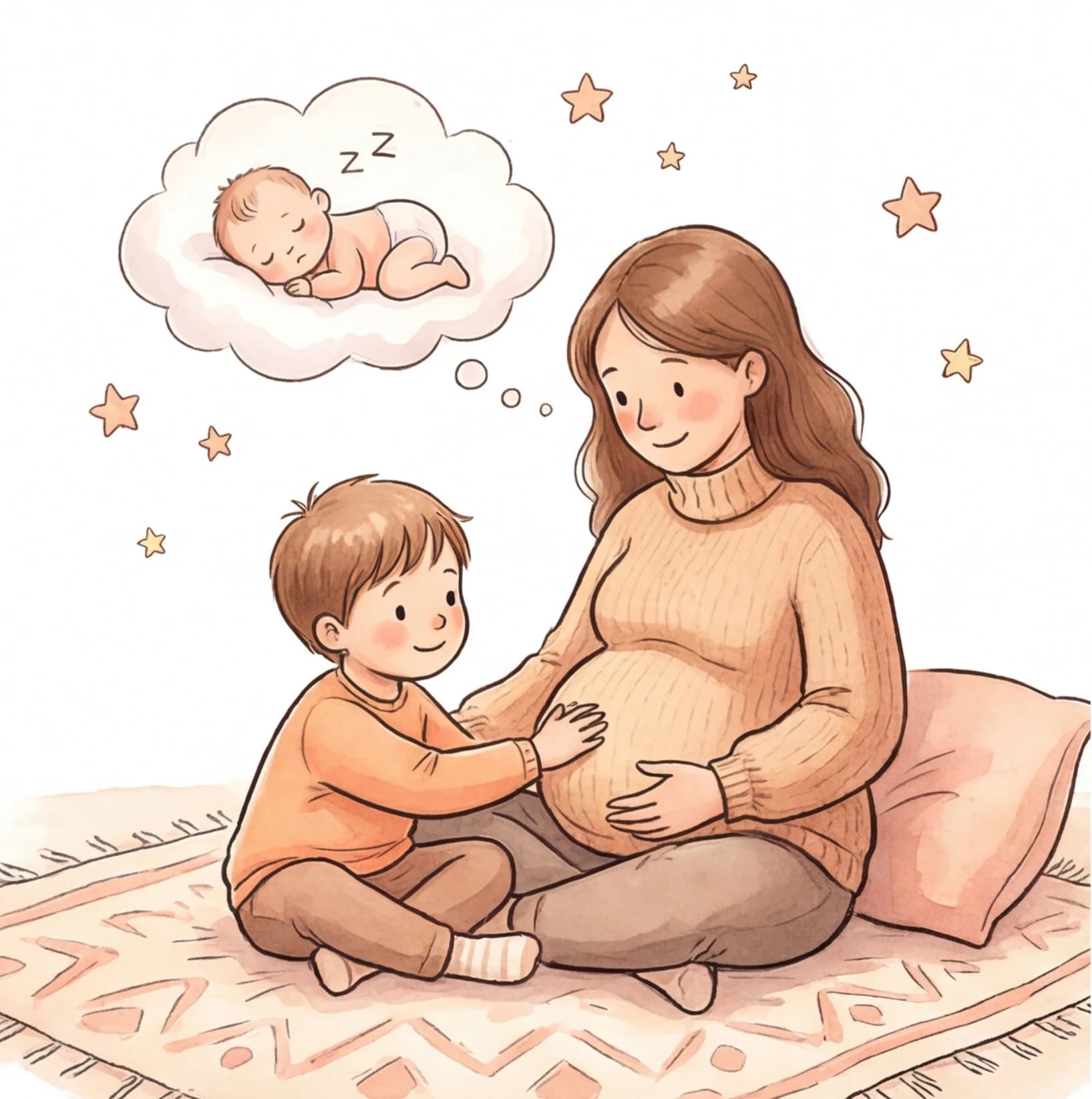
The story opens on your older kid noticing mom's belly getting bigger, noticing the new crib in the corner, noticing that something big is coming. Kids process transitions better when they're named. The story names it without making it scary.
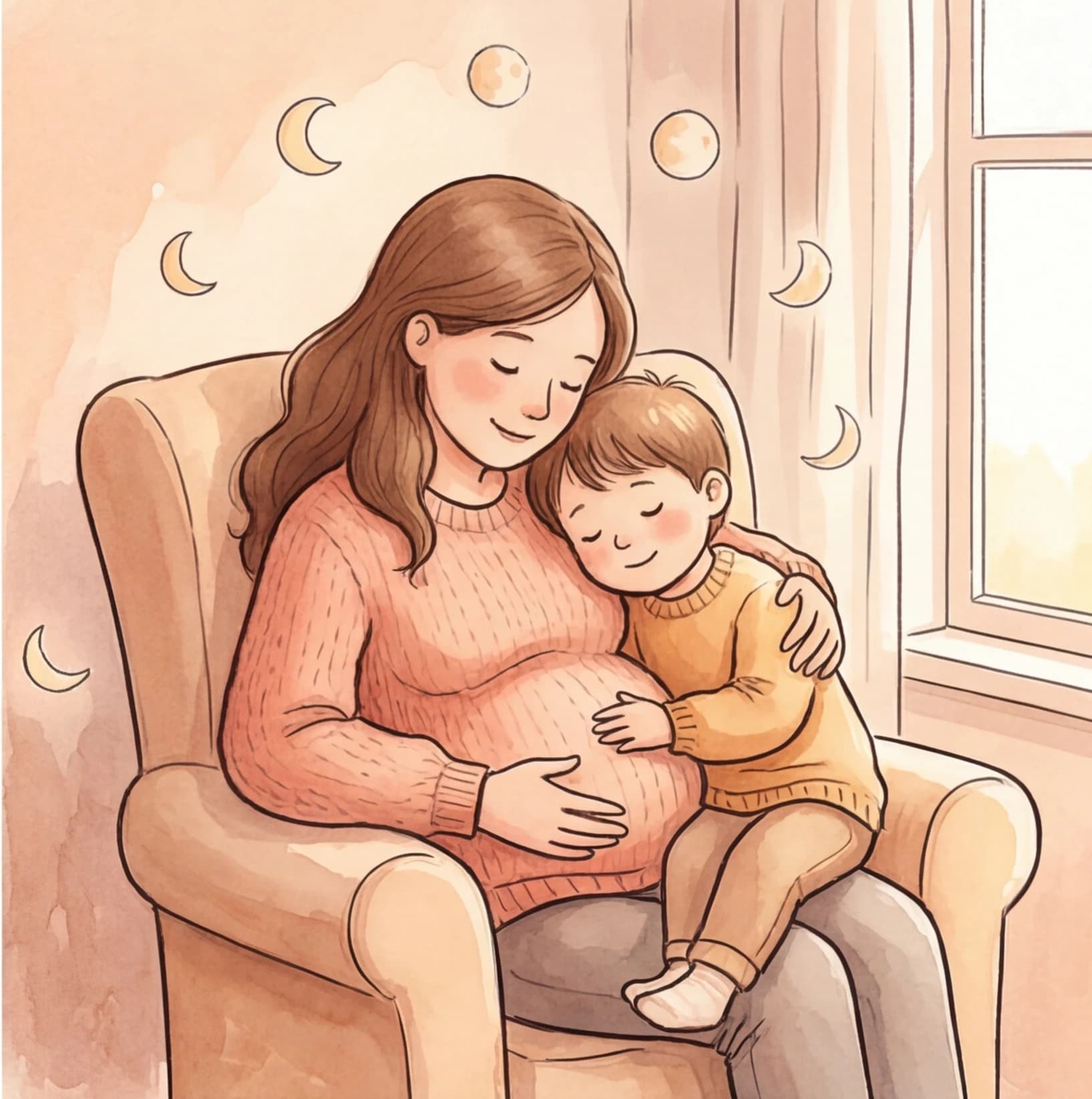
The second beat addresses their actual worry — 'will mom and dad still love me'. The story shows parents still being there, still holding the older kid, still reading the story. This is the most important page of the whole rehearsal and we write it carefully every time.
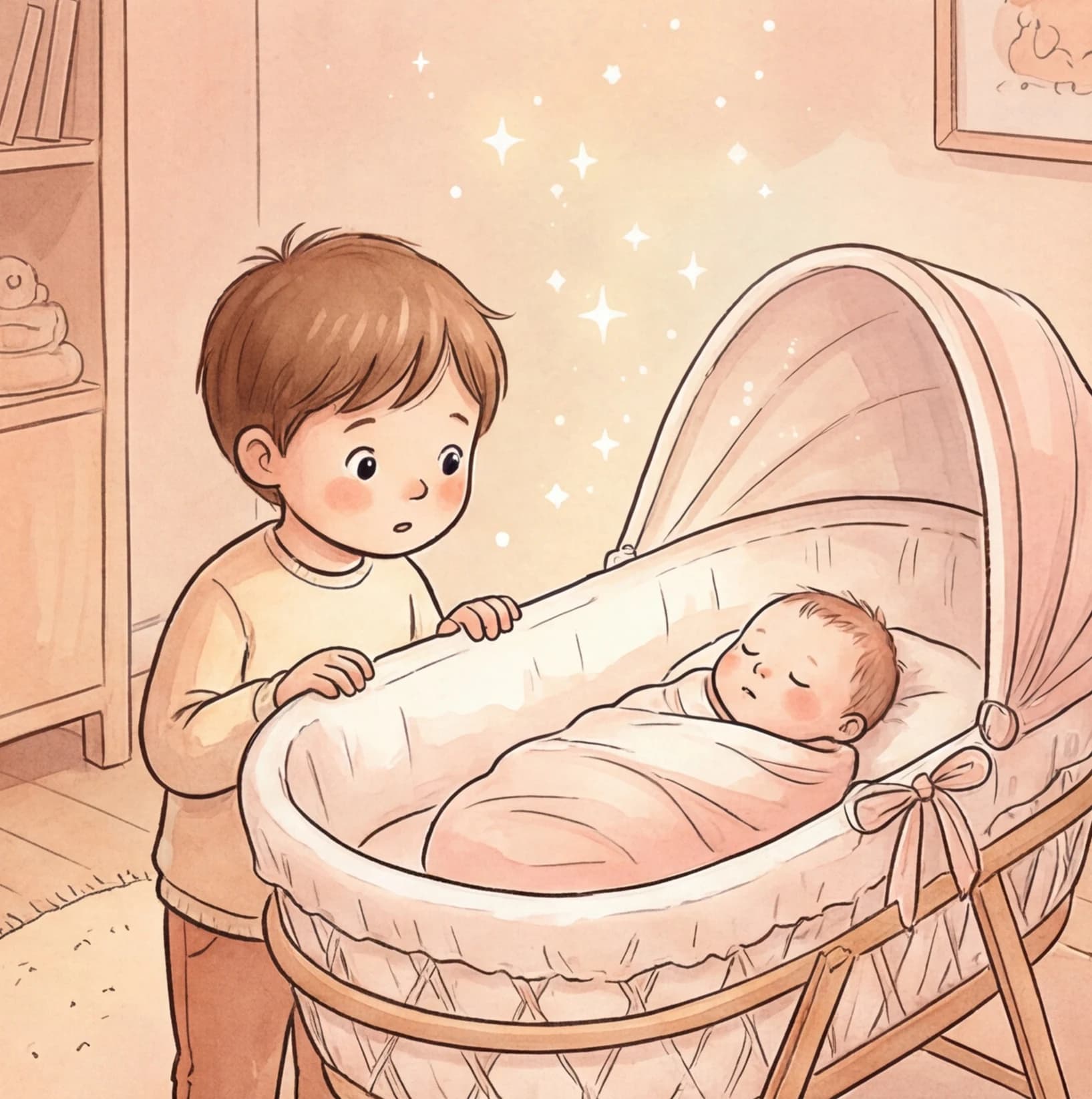
The final page is the meeting. The older kid approaches the baby gently. The baby is small and sleepy and not scary. The older kid whispers hello. The story ends with everyone safe, everyone loved, everyone still together. It's a template they carry into the real moment.
Why a rehearsal bedtime story helps an older kid more than any 'big sibling' book.
Every bookstore has a 'becoming a big sibling' picture book section. They're all lovely. They're all generic. The main character has a name your kid doesn't share, a family that isn't yours, a baby that doesn't look like your new baby, and a resolution that feels vaguely right but doesn't quite land. Your older kid listens, looks at the pictures, and doesn't fully understand that the book is about them.
A personalized rehearsal story works differently. The hero is your actual older kid, by name. The parents are you, by name. The new baby has the baby's name (or the placeholder 'the new baby' until you know). The family looks like your family. When your kid listens to the story, their brain is processing something specific and real, not something abstract. That specificity is the part that makes rehearsal stories work — for first days of school, for doctor visits, for any big transition, and especially for becoming a big sibling.
Child psychologists who work with preparing-for-sibling families talk about the three things older kids actually worry about when a baby is coming: (1) will mom and dad still love me, (2) will the baby take my stuff, and (3) do I have to be gentle in a way I don't know how to be. Good rehearsal stories address all three explicitly. Night Night's new-baby-sibling stories walk through exactly these beats, every night, for the weeks before the baby arrives. By the time the baby comes home, your older kid has heard the answer to these worries fifteen times in a warm narrator voice. They've already rehearsed the meeting.
Start reading it a week or two before your due date. Make it part of the bedtime routine every single night until the baby arrives. The first story takes two minutes to generate and uses your kid's actual name. Free to try tonight — give it a few nights and see how the conversation at bedtime changes.
Sibling-prep questions.
When should I start reading it?+
About 2–3 weeks before the due date is the sweet spot. Younger kids (2–3) benefit from more repetition, so start earlier. Older kids (5–8) can handle a shorter runway.
What if we don't know the baby's name yet?+
No problem. The story can use 'the baby' or 'your new sister/brother'. You can update the name in the story later when you decide.
Is this a one-time story or nightly?+
Nightly is best. The repetition is what makes rehearsal stories work. Same three beats, slightly different adventure each night, for the runway before baby comes home.
What age does this work for?+
Ages 2–8. Younger kids get shorter, simpler versions. Older kids get more narrative depth. The core beats are the same.
Can we keep using it after the baby is home?+
Yes — and most families do. The stories gently shift from 'preparing for baby' to 'you're such a big sibling now', and the older kid stays the hero every single night. See also /new-big-sibling-gift if you want to gift the next chapter to friends.
Rehearse the
meeting.
Free to try — write tonight's sibling-prep story with your older kid as the hero. From $4.99/mo when you continue.