Riding out
the regression.
Your kid was sleeping through the night. Now they're not. You haven't changed anything. Welcome to the 18-month, 2-year, or 3-year sleep regression. It will pass — and a consistent personalized bedtime story every night is one of the simplest anchors to hold onto while you wait for it.
- A same-shape, same-voice personalized story every night
- Narrated aloud — works on nights you're too tired to read
- Reinforces the sleep cue the regression is trying to scramble
- Works for 18-month, 2-year, and 3-year regressions
- Free to try tonight — no card required
We know. It will pass. This helps in the meantime.
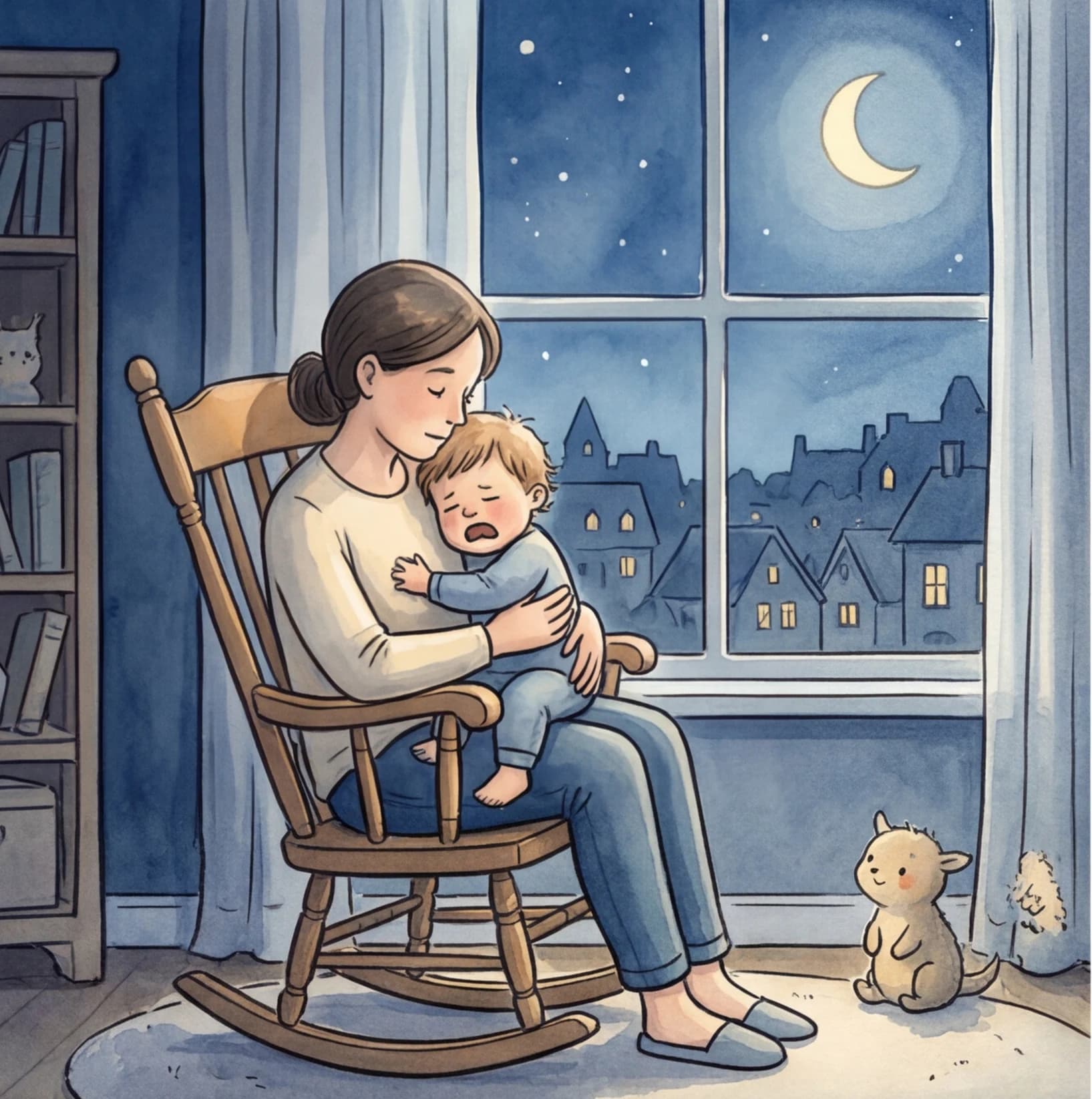
Ellie heard the same soft voice
and her eyes went slow.
An anchor
through the hard weeks.
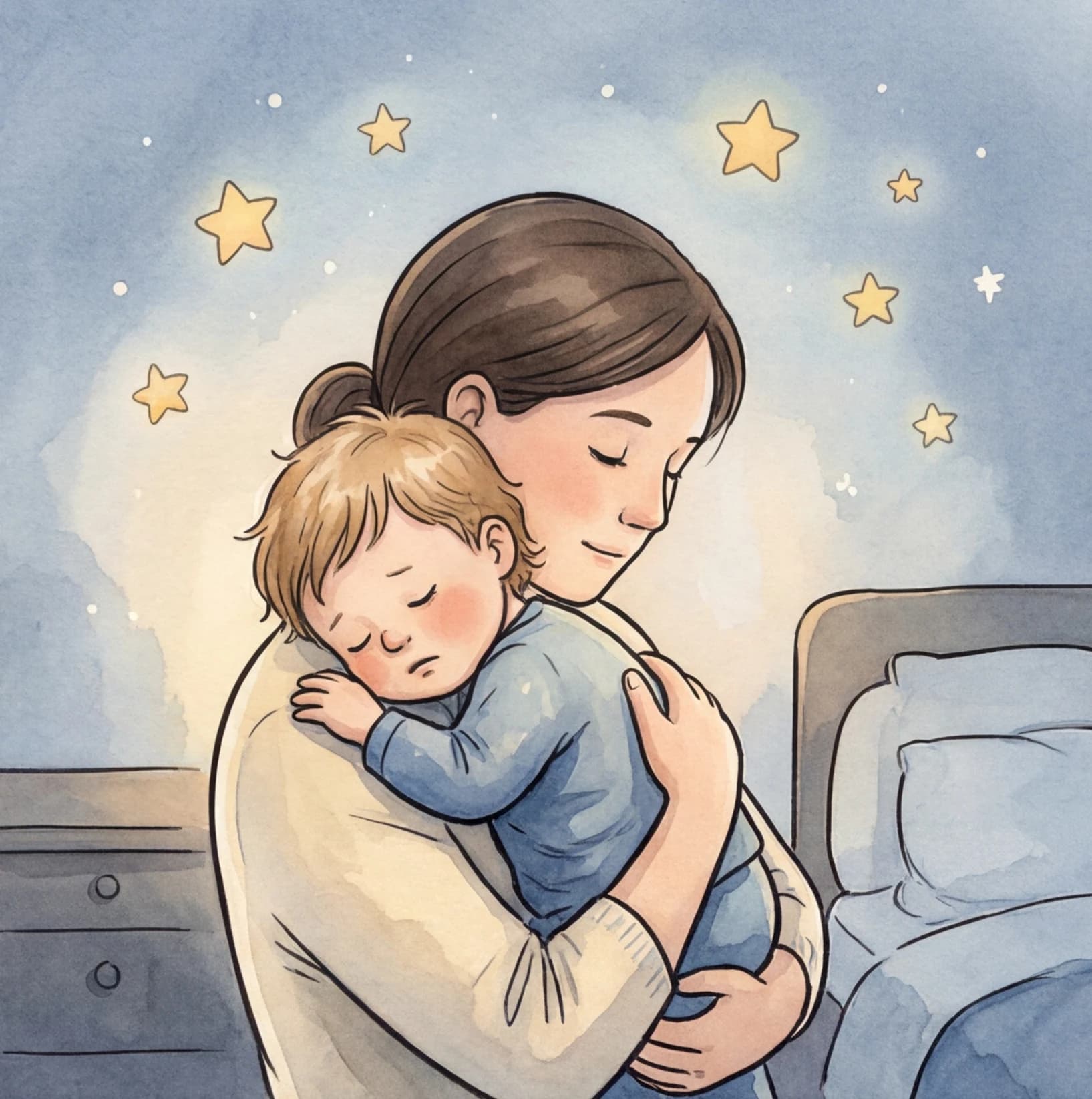
Sleep regressions scramble your kid's internal sleep cues — growth, development, separation anxiety, new skills all mess with the baseline. What you can still control is the external cues. Same voice, same story shape, same ending beat, every single night. It's the one thing the regression can't take away.
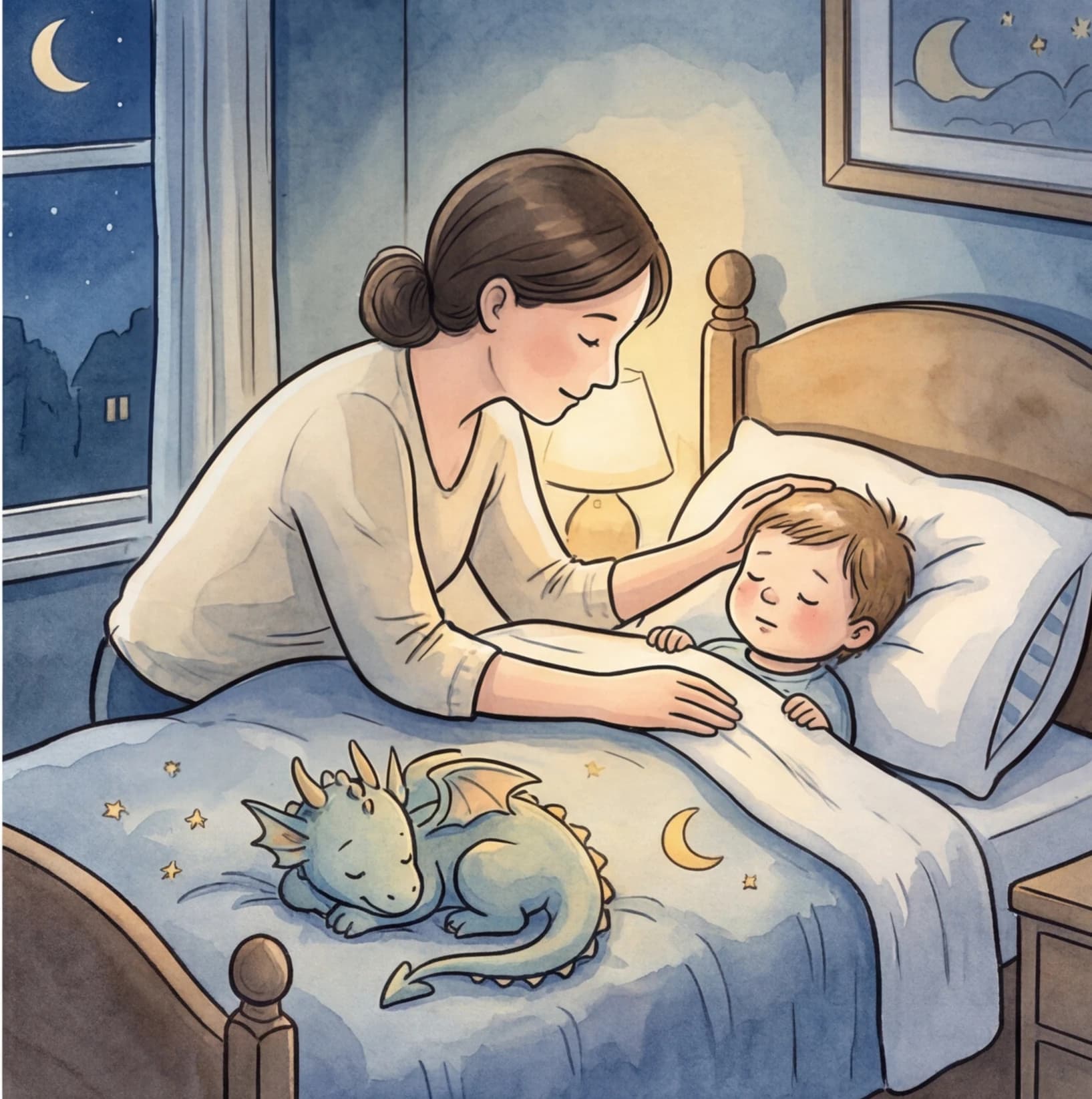
Regressions mean the parents are also not sleeping. On nights when reading a picture book is too much, press play on the narration. Your kid still hears the same voice. You still get to cuddle. The ritual survives even when your eyeballs don't.
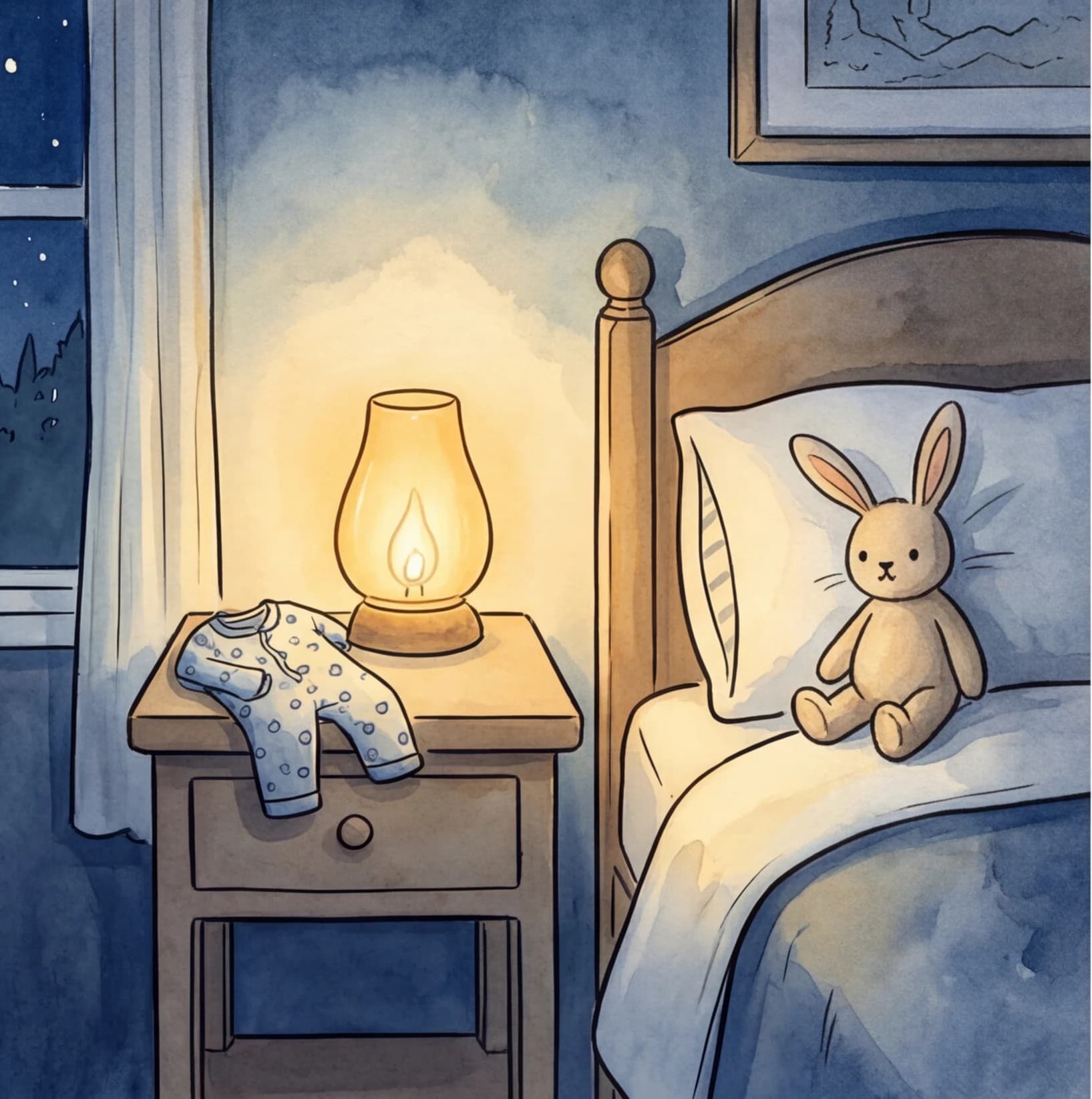
Parents panic during regressions and try ten new things in a week. That makes it worse. The strategy is to keep everything identical — including the bedtime story — and let the regression pass through a stable environment. Stability is the whole medicine.
Why a consistent story is one of the best things you can do during a sleep regression.
Sleep regressions are not a behavior problem. They are a developmental signal — your kid's brain is making room for a new skill (walking, talking, self-awareness, abstract thinking) and the old sleep patterns temporarily break while the brain reorganizes. Every pediatric sleep expert agrees on the basic timeline: the 18-month regression is about language and separation; the 2-year is about will and autonomy; the 3-year is about imagination and dreams. All of them pass within 2–6 weeks. All of them feel endless while they're happening.
The worst thing parents can do during a regression is change their strategy mid-week. Every time you introduce a new lovey, a new night light, a new white noise, a new bedtime, a new parent doing the tuck-in, you give your kid's already-scrambled sleep cues one more thing to relearn. What works much better is to keep everything identical and ride the wave. The kid's brain figures it out. The regression passes. You come out the other side.
But 'keep everything identical' is a lot to ask of a parent who is running on four hours of sleep and no longer thinks clearly by 7pm. This is where a personalized story subscription becomes genuinely useful — not as a regression cure, because nothing cures a regression except time, but as the one part of the bedtime ritual that stays identical without requiring any cognitive effort from you. The story is already there. The voice is already familiar. The shape is the same as last night. Your kid's brain gets one reliable cue to anchor against.
If you're in week one or two of a regression, start tonight. Use the narration voice even on nights you'd normally read out loud (save your energy). Don't change anything about your bedtime routine until the regression fully passes — then reassess. Most families report that having a stable story anchor shortened their regression by days. It's not magic. It's consistency at the one moment of the day when consistency is hardest to hold onto.
Regression questions.
How long do sleep regressions last?+
2 to 6 weeks typically, depending on the regression and the kid. The 18-month and 2-year regressions are often the hardest. The 3-year and 4-year regressions are usually shorter. All of them pass.
Is a personalized story better than a regular bedtime book during a regression?+
Yes, for two reasons. First, the shape is more consistent — same length, same voice, same rhythm every night. Second, when you're too tired to read, you can press play without losing the ritual. Regular picture books don't have that option.
Should I try anything else during a regression?+
No, and this is counterintuitive. The best strategy during a regression is to hold everything stable and wait. Introducing new things usually makes it worse. Hold the ritual, hold the bedtime, hold your nerves. It passes.
What age do regressions hit?+
Common ones: 4 months, 8–10 months, 12 months, 18 months, 2 years, 3 years. Not every kid hits every regression. The 18-month and 2-year are the most commonly reported as 'brutal'.
Does this work for babies as well as toddlers?+
Yes — the stories adapt to the kid's age. For babies under 12 months, the content is short, gentle, lullaby-style. For toddlers, it's full personalized adventures. The consistency of voice and rhythm helps across ages.
Hold the anchor.
Ride it out.
Free to try tonight — start a consistent bedtime story ritual that survives the regression. From $4.99/mo when you continue.