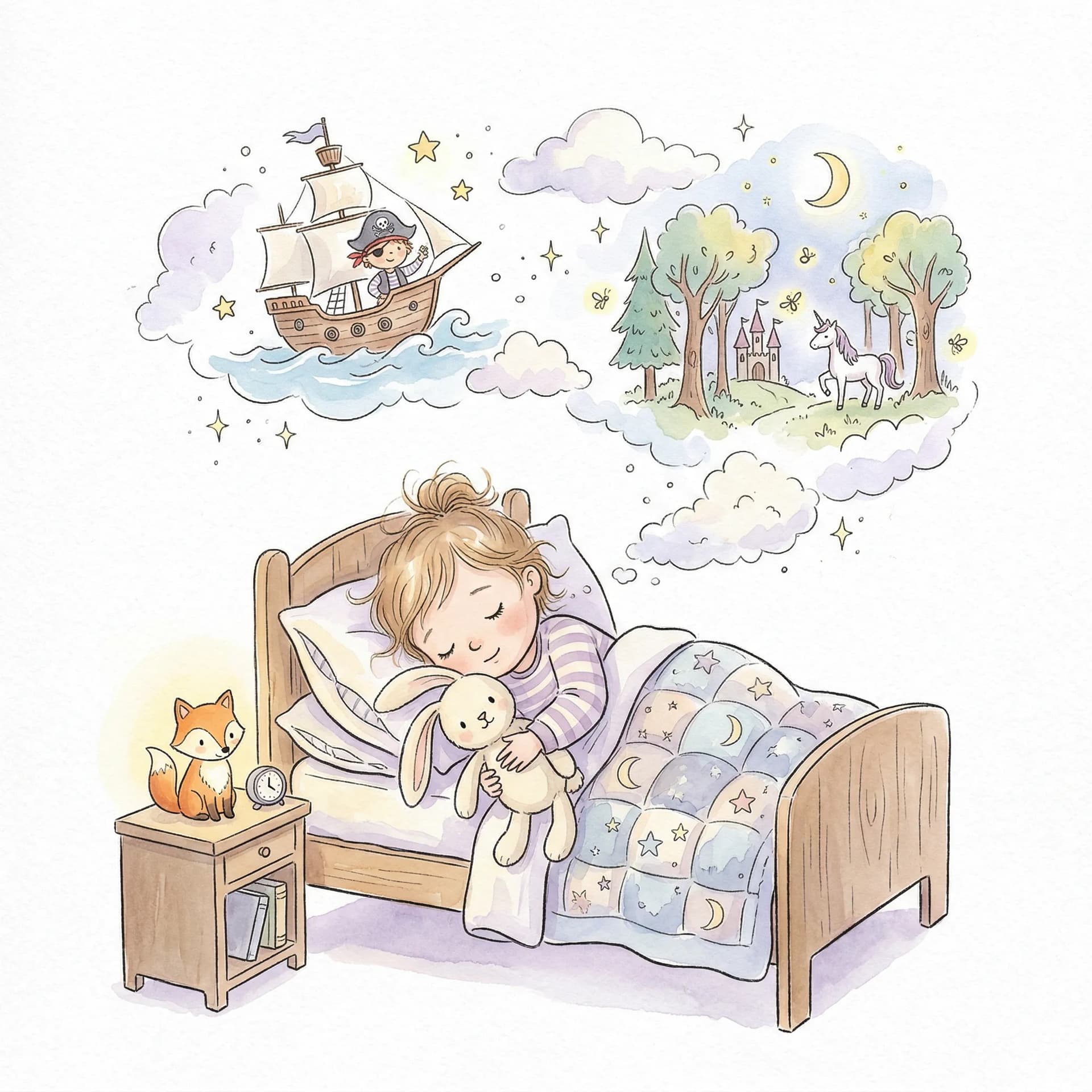
Bedtime Stories for Toddlers Who Won't Sleep: What Actually Helps
Co-founder
Editorial standards: how we research and update articles
When a toddler won't sleep, parents usually start by asking what story to read. The more helpful question is: what kind of story helps a toddler settle?
At this age, the story does not need to be impressive. It needs to be regulating. That usually means short, predictable, emotionally soft, and close enough to the child's real world that it feels safe.
What toddlers need from a bedtime story
Toddlers are dealing with a lot at bedtime: separation from the day, language still catching up to feelings, and a nervous system that is often already overloaded by the time pajamas go on. A bedtime story works best when it lowers intensity instead of adding more.
- Keep the story short
- Use familiar people, objects, and routines
- Repeat reassuring phrases
- End in bed, home, cuddling, or sleep
This is one reason highly personalized stories can help. When a toddler hears about their own breakfast, park visit, or stuffed animal, they do not have to work as hard to enter the story. The material is already known.
What usually makes bedtime stories worse
The wrong story for a tired toddler is often long, funny in an activating way, or full of chase energy right before sleep. Even a beloved theme like dinosaurs or pirates can become a problem if the pacing ramps up instead of down.
If your toddler already resists bedtime, avoid:
- Stories with cliffhangers
- Very silly voices that re-energize the room
- Plots that introduce new fears at night
- Stories so long that they become another stalling device
The best structure is ordinary-to-magical-to-calm
The most effective toddler bedtime stories often follow a very simple pattern. Start with something real and ordinary. Add one gentle magical turn. Then end back in safety.
For example: your child eats pancakes, meets a sleepy bunny at the park, takes the bunny home in a moonlit wagon, and says goodnight. That kind of arc is enough. It does not need a villain, a mystery, or a giant emotional lesson.
Why repetition still matters
Parents often worry they are boring their toddler by repeating themselves. Usually the opposite is true. Repetition helps toddlers feel secure because it lowers uncertainty. The same opening phrase, the same cuddle position, the same sleepy ending, even the same sidekick can all help.
This is where personalized stories can be useful instead of stimulating. You can vary the details while keeping the structure familiar. Night Night's approach of reusing the child as the hero and optionally keeping the same Sidekicks gives you novelty inside a recognizable frame.
A practical bedtime-story formula for toddlers
- Name one or two real things that happened today
- Choose a gentle world or very light fantasy layer
- Keep the read-aloud length to a few minutes
- End with the child tucked in and the world quiet
If you want examples by age, the best next step is the bedtime story age guides, especially for 2-year-olds and for 3-year-olds.
What I would do tonight
If your toddler is fighting sleep, I would not go looking for the most imaginative story possible. I would go looking for the most grounding story possible. Short, soft, specific, and familiar beats clever every time at this age.
If you want help generating that kind of story quickly, start with a Night Night story and type only a few details from the day. You can keep it simple on purpose.
Related reading
Try a personalized bedtime story tonight
Download the app free — every plan includes illustrations and voice narration.
Download on the App Store