Name the
feeling.
Kids melt down before they can say why. A personalized bedtime story where your child is the hero who notices a big feeling — sadness, worry, jealousy, frustration — and gently moves through it, gives them the words before they need them. Emotional literacy, delivered one night at a time.
- Your child as the hero who recognizes the feeling
- Gentle, name-the-feeling framing — never moralizing
- Works for anger, sadness, worry, jealousy, and transitions
- Narrated in a warm voice that models calm
- Free to try tonight — no card required
Ages 3–8. Built on emotional-literacy best practices.
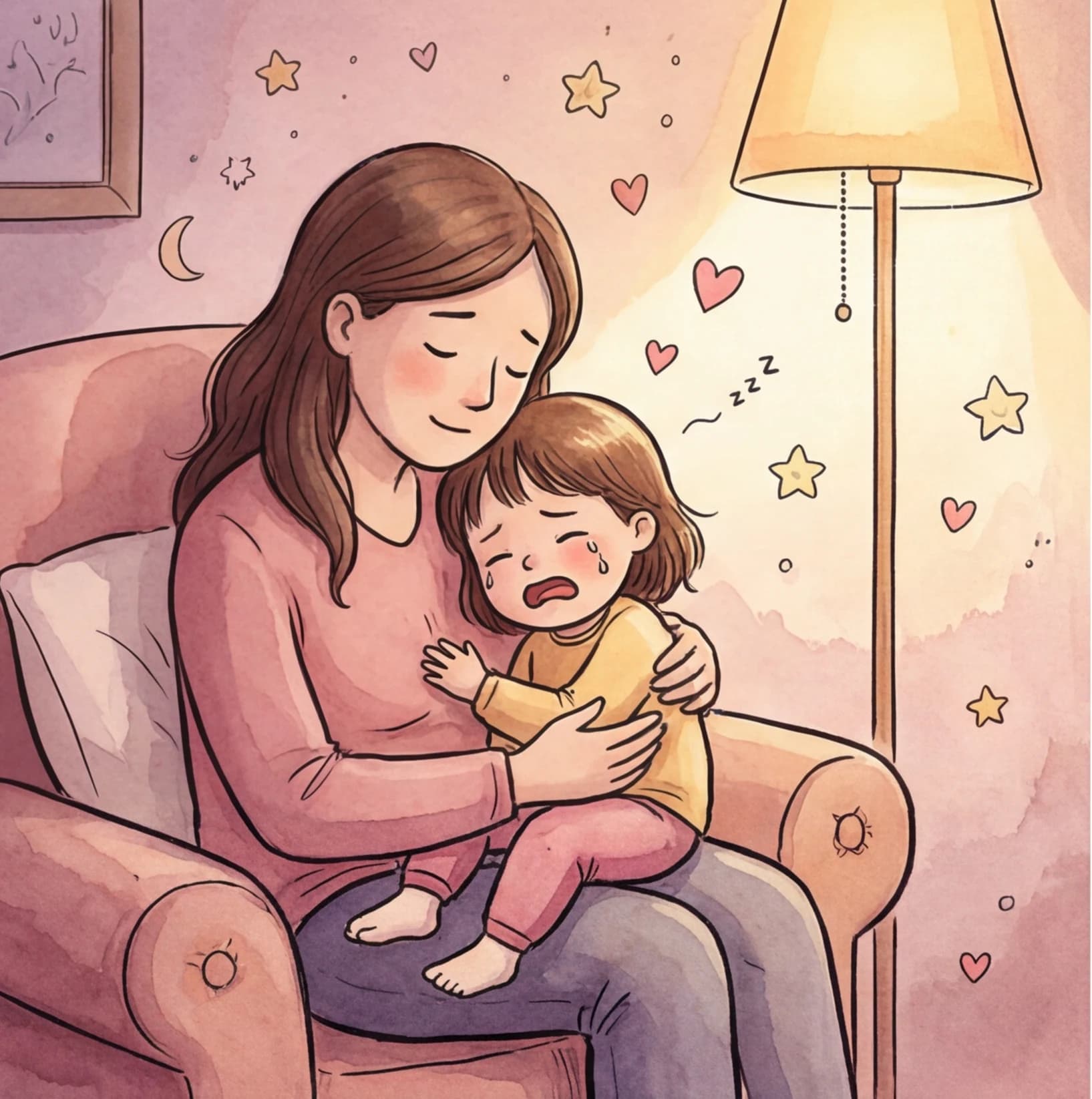
Lena felt the green-hot angry
and gave it a name.
Feelings, named
and moved through.
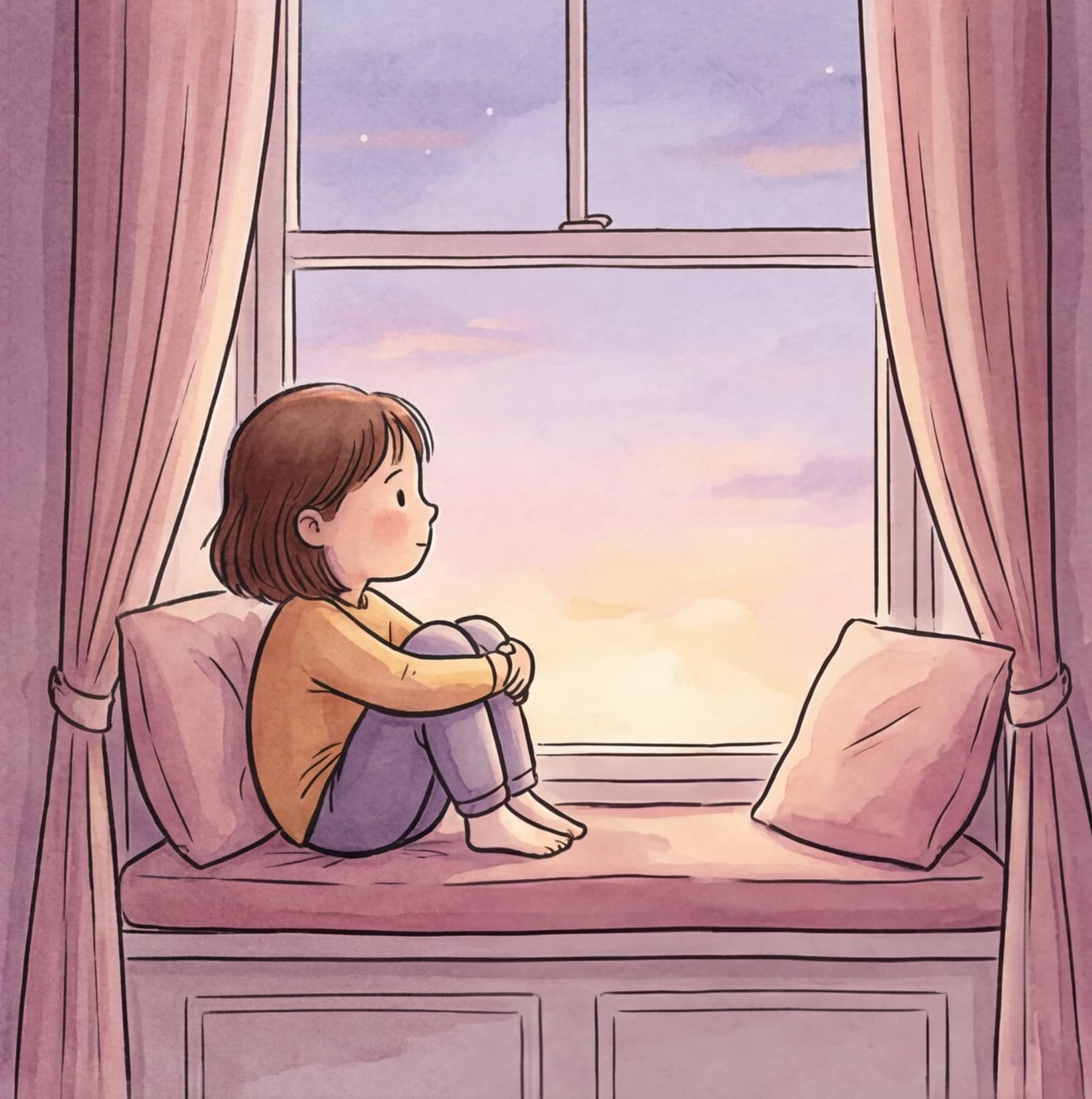
Each story opens with the hero noticing something unusual — a tight chest, a hot head, a heavy stomach. We use body-based language kids can recognize. The hero doesn't fix it yet. They just notice it, and the story names it. For emotional literacy, naming is half the battle.
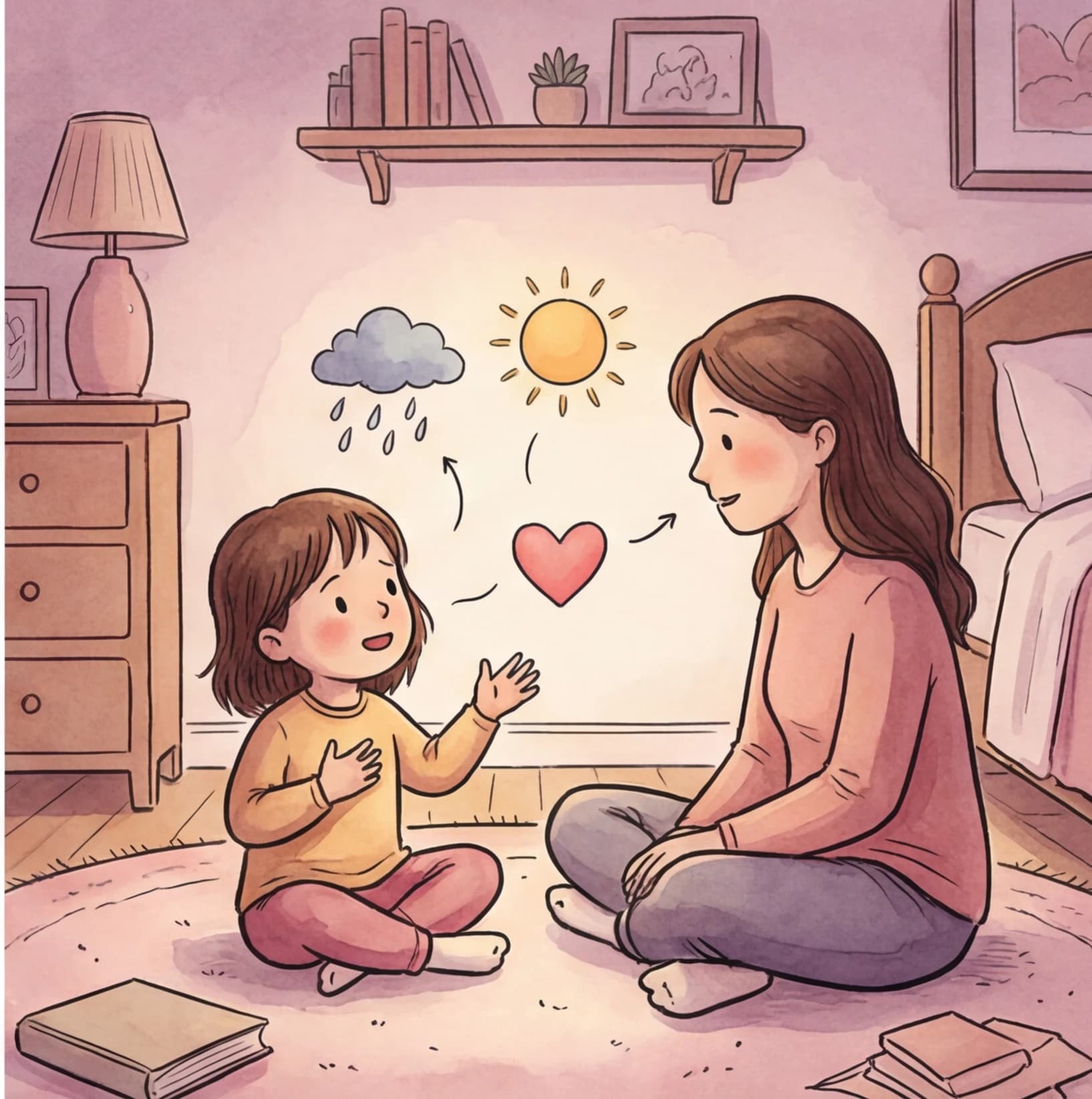
The second beat is the gentle move — a slow breath, a quiet walk, a conversation with a friendly creature. We never skip the feeling or moralize about it. The hero sits with it for a beat, and then finds the smallest forward motion. That's the model we want kids to learn.
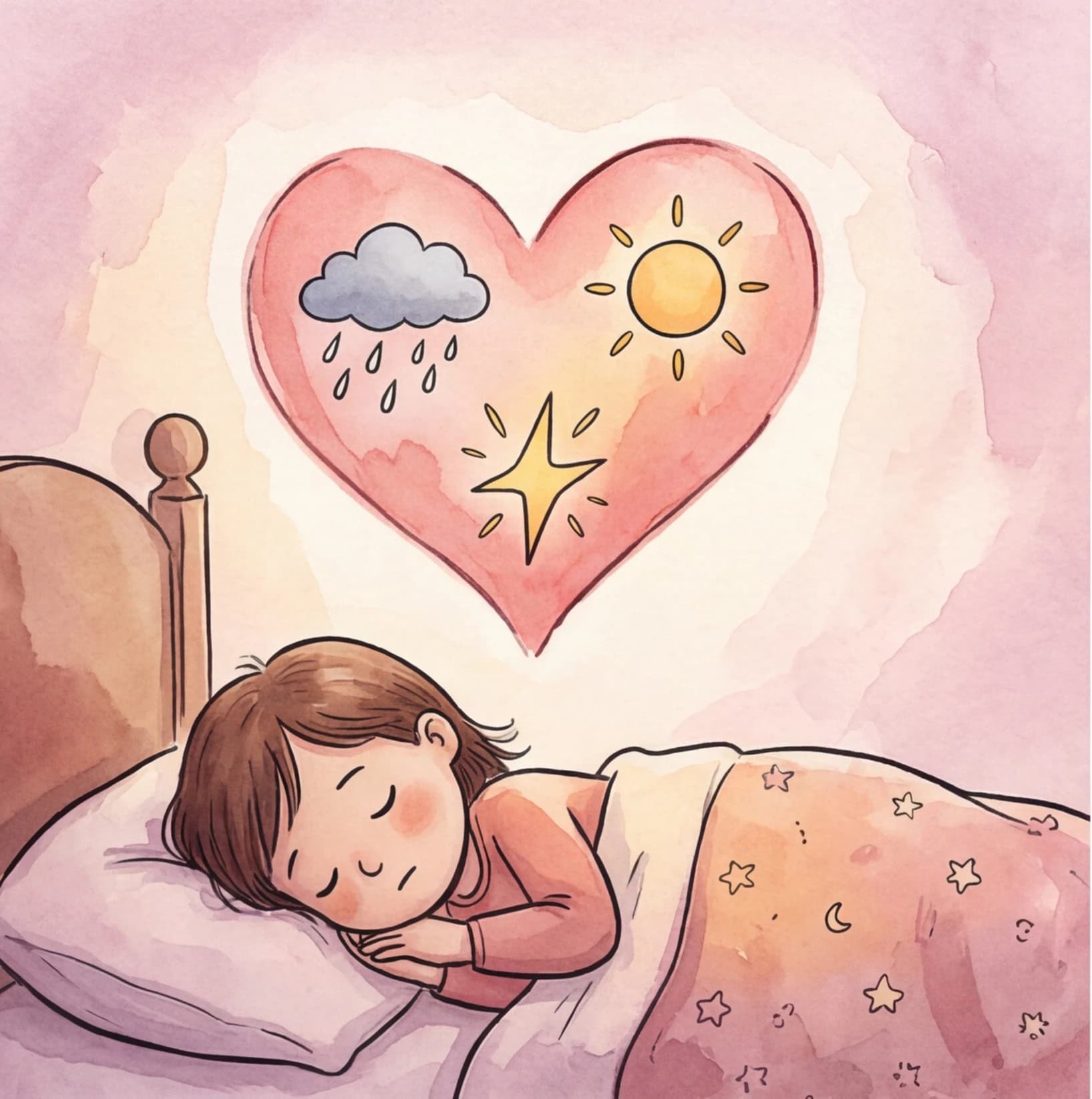
The final page is the soft landing — the hero curled up safe, feeling still present but no longer loud. This is critical. Kids need to see that feelings don't disappear, they just become smaller when you name them. Every story ends with the feeling still real but the kid still loved.
Why naming a feeling in a bedtime story helps more than asking 'how do you feel?'
Every parent of a feeling-heavy kid has asked some version of 'use your words' at 6pm on a Tuesday and watched the kid meltdown harder. The reason this doesn't work is that kids under about 7 don't have direct access to their own emotional vocabulary in the moment — they're in the feeling, not observing it. Asking them to name something they're drowning in is asking them to do the hardest cognitive task at the worst possible time.
What works much better is pre-loading the vocabulary. Give kids emotional language when they're calm, safe, and attentive — and bedtime is the perfect moment for this. They're not in the middle of a feeling. They're curled up in pajamas, soft and relaxed, listening to a story. If the story gives them a name for the feeling they had earlier that day ('Lena felt the green-hot angry'), they hear it, they recognize it, and they internalize the word. The next time the feeling happens, they have the word for it — not because a grown-up forced them to say it, but because they already had it in their head.
This is what Night Night's feelings-mode stories are designed to do. The hero is your kid. The feeling shows up in body-based language kids can actually feel. The story names it, sits with it, and gently moves through it. Over weeks of nightly stories, your kid builds a genuine emotional vocabulary that they can reach for when they're in the middle of a hard moment. Parents of therapy-kids tell us this works as a between-session reinforcement. Parents of ordinary feeling-heavy kids tell us it's the first bedtime tool that ever helped the 6pm meltdowns.
You can also request specific feelings — if your kid has been dealing with a new sibling, request jealousy stories; if they started school, request worry; if they're moving, request sadness. The stories will gently cycle through the feeling you asked for while always staying the hero's story. It's not therapy, but it's the most supportive nightly ritual we know how to build.
Emotional questions.
What feelings can the stories cover?+
Sadness, anger, worry, jealousy, frustration, loneliness, overwhelm, and transition-anxiety. You can request specific feelings your kid is working through, and the stories will gently cycle through them.
Is this for neurodivergent kids?+
Many parents of autistic kids and ADHD kids use it — the body-based language and the rehearsal-at-calm principle are both approaches that neurodivergent kids often respond to. It's not a therapy tool, but it can reinforce the work therapists are already doing.
Does it ever moralize or lecture?+
No. The stories never tell the hero 'you shouldn't have felt that way'. Every feeling is validated. The story just models the move-through.
What age does this work for?+
Best for ages 3–8. Younger kids benefit from the body-based language; older kids benefit from seeing the whole emotional arc modeled.
Is it a replacement for therapy?+
No. For kids with clinical concerns, work with a qualified child therapist. Night Night is a bedtime ritual that can supplement therapeutic work, not replace it.
Give the feeling
a name.
Free to try — make tonight's personalized feelings story. No card required. From $4.99/mo when you continue.