A routine
becomes a ritual.
Everyone talks about the bedtime 'routine'. What your kid will actually remember twenty years from now isn't the checklist — it's the ritual. The specific voice, the specific warmth, the specific story. Here's how to turn the routine into a ritual, with a personalized story as the emotional anchor.
- The difference between routine (steps) and ritual (meaning)
- One personalized story every night as the emotional anchor
- Same voice, same rhythm, same ending — every single night
- Becomes one of your kid's forever-memories
- Free to try tonight — no card required
Works for ages 2–8. Parents tell us the story is what their kids remember.
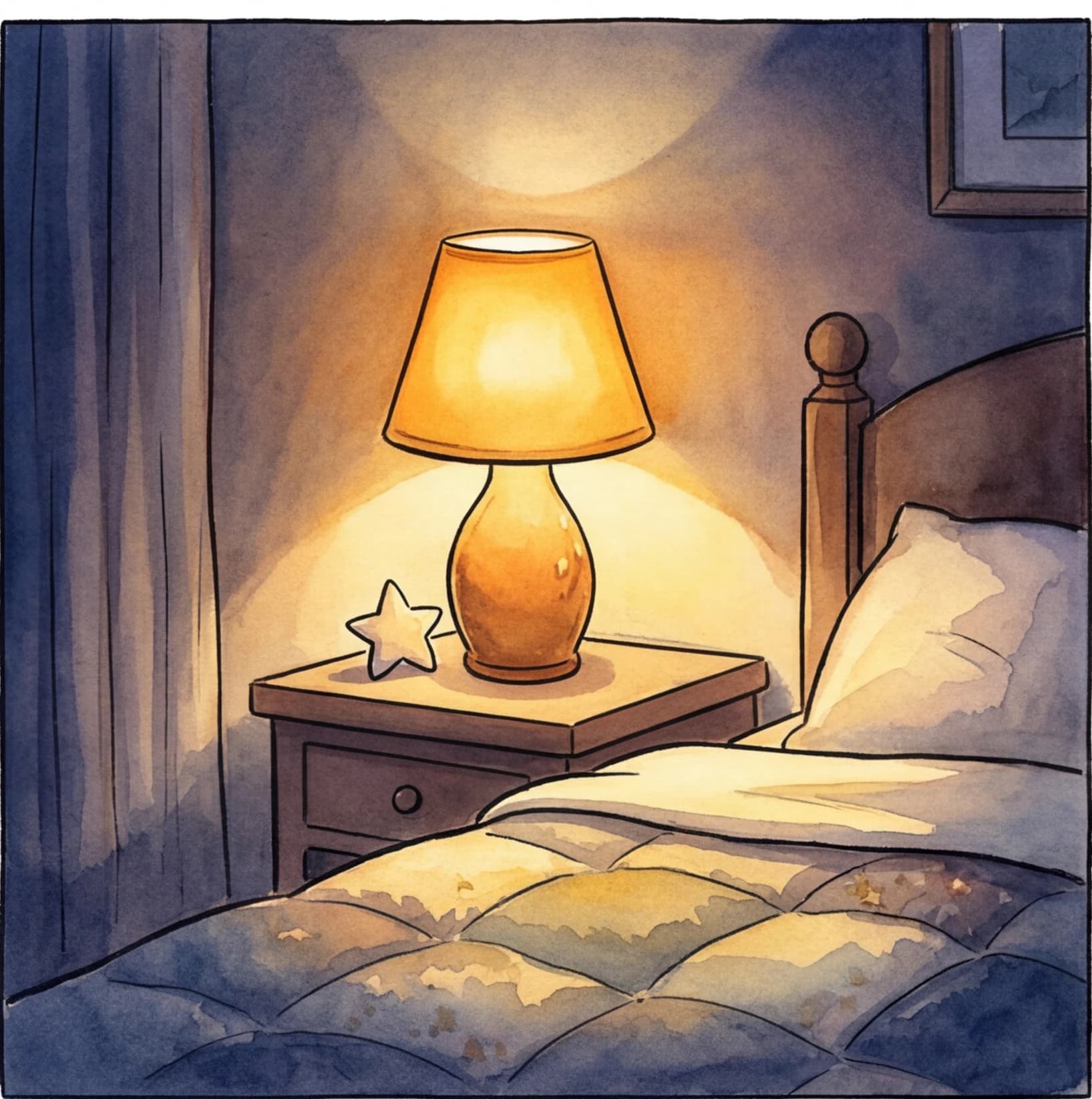
Mama turned the little lamp on
and the whole day went soft.
Three moves that
turn one into the other.
Routines are efficient. Rituals are lit a specific way. Pick one warm lamp that only comes on at bedtime — nowhere else in the house, nowhere else in the day. When your kid sees it, their nervous system already knows what comes next. The lamp is the ritual's signature.
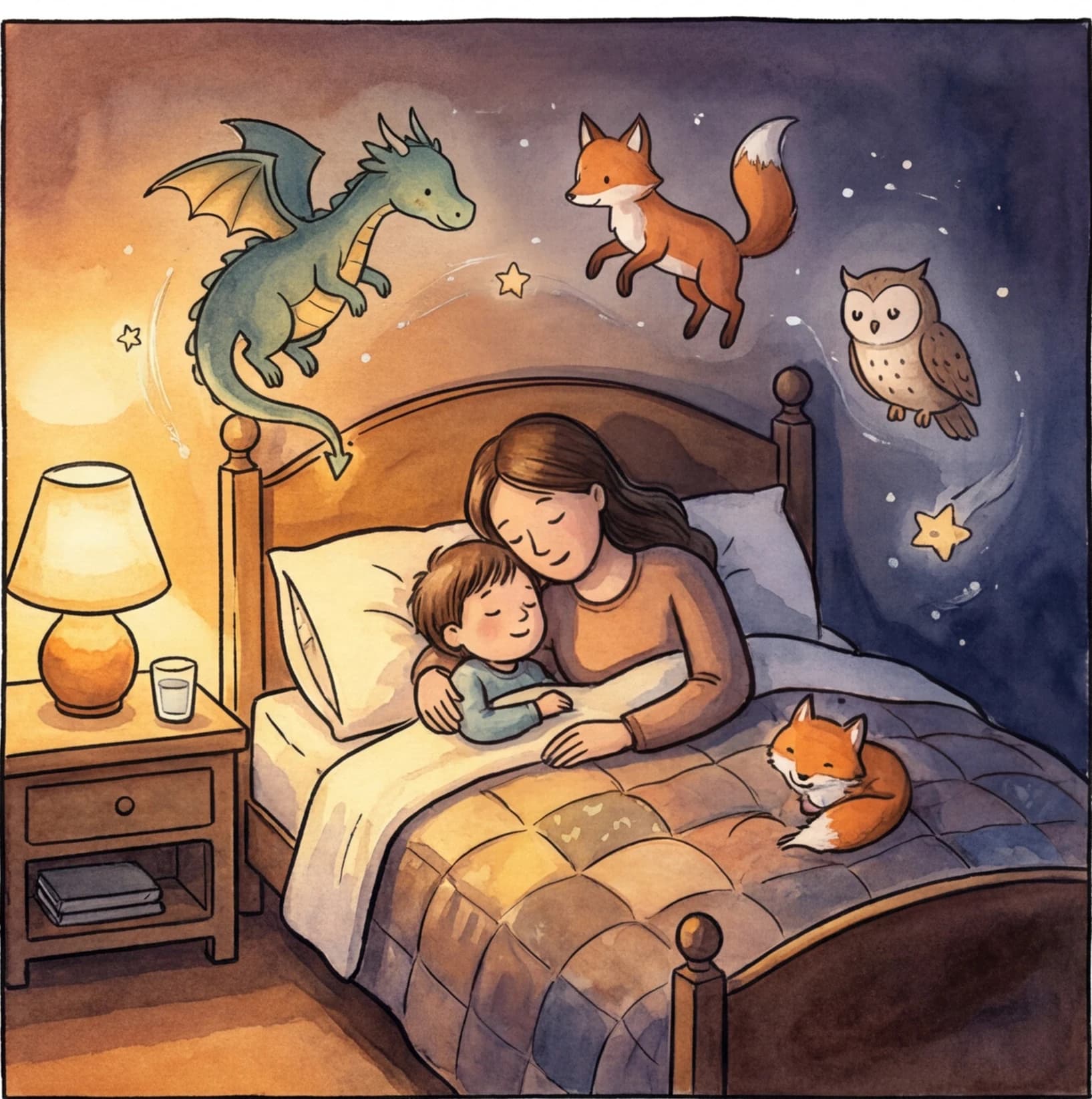
The story is the emotional anchor. One personalized Night Night story every night, narrated in the same warm voice — yours if you're reading out loud, ours if you're pressing play. Same length, same rhythm, same world of characters who know your kid's name. That sameness is the ritual.
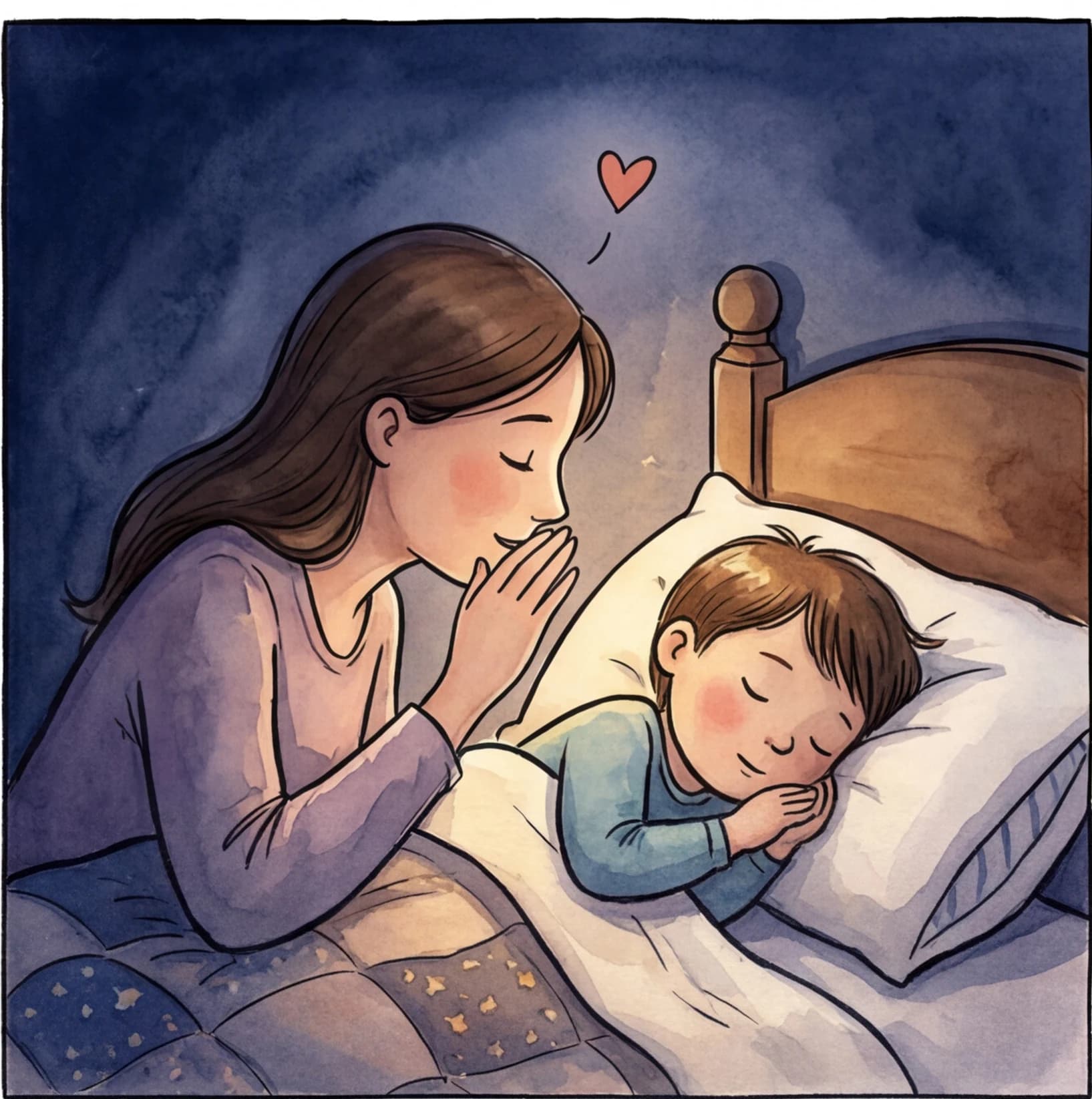
Pick a single sentence you say every night as the light goes off. 'I love you to the moon and back'. 'Sleep tight, little one'. 'See you in the morning'. Whatever it is, say it identically every night. This is the sentence your kid will remember for the rest of their life.
The difference between a routine and a ritual, and why it matters.
Every parenting book tells you to have a bedtime routine, and they're right, but they're describing the wrong thing. A routine is a checklist — bath, brush, book, bed. A ritual is what the checklist means. The routine is mechanical; the ritual is emotional. A routine is what you do to get your kid to sleep; a ritual is what your kid will remember about being loved when they are twenty-eight years old.
The difference is in the details. A routine uses whatever book is on the shelf. A ritual uses the same voice, the same light, the same sentence. A routine changes when you're tired or busy. A ritual is the thing you preserve even when you're tired, especially when you're busy. Kids can tell the difference. They feel the weight of a ritual and not the weight of a routine, and that weight is what they carry into adulthood as their sense of having been held.
Night Night was built around this idea. Every night, your kid gets a new personalized story — same shape, same voice, same rhythm, same ending. The content is fresh, but the form is identical. That sameness is what turns the story into a ritual object. After a few weeks, the narration voice becomes a conditioned sleep cue. After a few months, your kid starts walking to bed on their own when they hear the intro music. After a few years, the ritual is woven into their memory of childhood.
To turn your bedtime routine into a bedtime ritual, you don't need to change much. You need one warm light that only comes on at bedtime. You need one personalized story every single night, in the same voice and format. And you need one sentence you say every night as the light goes off. That's it. That's the whole ritual. Start tonight.
Ritual questions.
Is 'ritual' different from 'routine' or is this just semantics?+
Meaningfully different. Routines are behavior patterns; rituals are behavior patterns plus emotional weight plus consistency across time. The semantic distinction matters because parents who aim for 'routine' tend to optimize for efficiency. Parents who aim for 'ritual' tend to optimize for meaning. The kids notice.
What age does this work for?+
Ages 2 through 8 is the sweet spot. Younger kids benefit from the sameness; older kids benefit from the emotional anchor as they start to have harder days. The ritual can continue into the early tween years with minor adjustments.
Do I have to use a Night Night story or can I use regular books?+
A personalized story is just a particularly effective form of anchor — because the hero is your kid and the shape is identical every night. Regular books can work too, but you'll need to pick one favorite and read it a lot, which most kids get bored of. The personalized version gives you sameness of form with novelty of content.
How long until it becomes a 'real' ritual?+
About 3–4 weeks of consistency. After that, the nervous system has learned the cues and the kid starts responding to the ritual with automatic wind-down. Skipping nights resets this clock.
What's the 'one sentence at the end' supposed to be?+
Whatever feels true for you. 'I love you to the moon and back'. 'Sweet dreams, little warrior'. 'You are so loved'. The sentence matters less than the consistency — use the same one every single night, word for word.
Start the ritual.
Tonight.
Free to try — make tonight's personalized bedtime story and start the ritual. From $4.99/mo when you continue.